

Cart
0
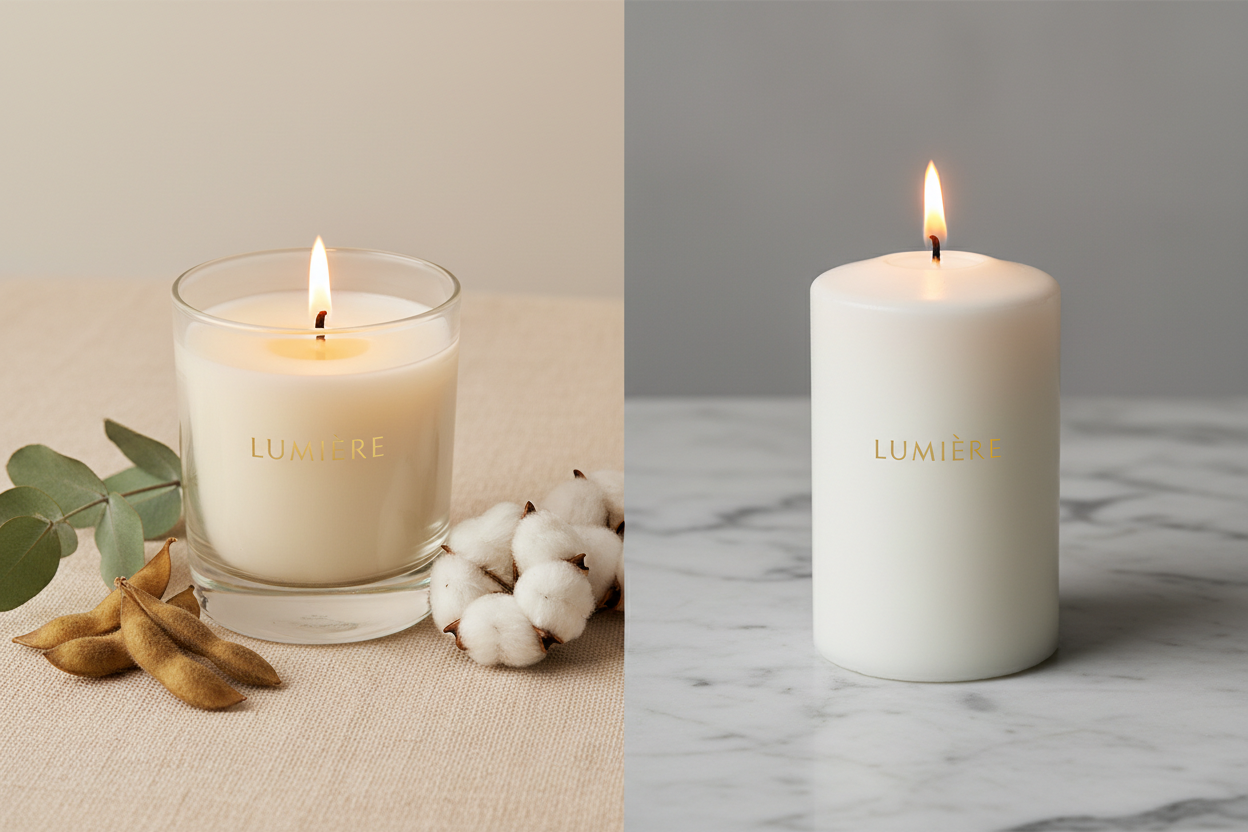
Soy Wax vs Paraffin Candles: The Complete, Honest Comparison
Walk into any candle shop and you'll see dozens of options. But here's what most labels won't tell you: the type of wax inside matters enormously — for your health, your home, and the planet. Today we're putting soy wax and paraffin head-to-head across every category that matters to help you make a truly informed choice.
🌿 Soy Wax
Plant-based · Renewable · Clean
VS
⚗️ Paraffin
Petroleum-based · Conventional
The Head-to-Head Comparison Table
| Category | 🌿 Soy Wax | ⚗️ Paraffin |
|---|---|---|
| Toxicity SOY WINS | ✓ Non-toxic, plant-based | ✗ Releases petrochemicals |
| Soot Production | ✓ Minimal to none | ✗ Heavy black soot |
| Burn Time SOY WINS | ✓ 30–50% longer | ✗ Burns faster |
| Raw Material | ✓ Soybeans (renewable) | ✗ Crude oil (finite) |
| Scent Throw SOY WINS | ✓ Rich, natural, even | ~ Strong but can be harsh |
| Biodegradable | ✓ Yes, fully | ✗ No |
| Cleanup | ✓ Soap & warm water | ✗ Requires solvents |
| Price Point | ~ Slightly higher upfront | ✓ Cheaper per unit |
| Value for Money SOY WINS | ✓ Lasts longer = better value | ✗ Burns out faster |
| Skin & Allergy Safety | ✓ Generally hypoallergenic | ✗ Can trigger reactions |
Breaking Down Each Category
🏆 Burn Time: Soy Wins by a Landslide
Soy wax has a lower melting point than paraffin, which means it burns more slowly and evenly. A 10oz soy candle typically burns for 60–80 hours, while the same paraffin candle might last only 40–55 hours. Over time, this longer burn time more than offsets soy's slightly higher price point.
70h
Average Soy Burn (10oz)
48h
Average Paraffin Burn (10oz)
🏆 Air Quality & Toxicity: Not Even Close
This is where the difference becomes most important. Paraffin wax releases known toxic compounds including toluene and benzene — both recognized as carcinogens — when burned. It can also release acetaldehyde, formaldehyde, and acrolein as combustion byproducts.
Soy wax, being a hydrogenated vegetable oil, burns cleanly without releasing these petrochemical compounds. Independent testing consistently shows soy candles produce significantly lower levels of volatile organic compounds (VOCs).
Why Soy Burns Cleaner
The carbon chain structure of soy wax is shorter and more complete in combustion than petroleum-based paraffin. This means more of the wax converts to CO₂ and water vapor during burning, with far fewer unburned hydrocarbon particles released into your air.
🏆 Scent Throw: Soy's Natural Advantage
Many people assume paraffin candles smell stronger — and they often do throw scent more aggressively. But there's a difference between loud and beautiful. Soy wax has a lower fragrance loading limit that actually forces a more nuanced, authentic scent experience.
Because soy wax is porous and holds fragrance oil within its structure (rather than just on the surface), it releases scent gradually and consistently throughout the entire burn — not just in the first hour.
The Paraffin Scent Problem
Paraffin candles often smell strongest when first lit, then fade considerably. Many manufacturers compensate by adding synthetic fragrance amplifiers — which themselves can be irritating to the respiratory system.
Price: Paraffin Is Cheaper Upfront — But Soy Wins on Value
Yes, soy candles typically cost $2–$5 more per candle than comparable paraffin ones. But when you factor in the 30–50% longer burn time, soy candles are actually the better deal. A $28 soy candle that burns for 70 hours costs 40 cents per hour. A $22 paraffin candle burning for 45 hours costs 49 cents per hour.
The Verdict: When to Choose Each
Choose Soy Wax If You...
- Care about indoor air quality and want a cleaner burn
- Have children, pets, or anyone with respiratory sensitivities at home
- Value natural, sustainable products with eco-conscious sourcing
- Want a candle that lasts longer and delivers consistent scent
- Prefer a natural, creamy aesthetic with visible handcrafted quality
When Paraffin Might Make Sense...
- One-time decorative use where burn quality is irrelevant
- Very tight budget constraints with no concern for health factors
- Specific technical applications (birthday candle wax, etc.)
Our Honest Recommendation
For everyday home use — especially in enclosed spaces, bedrooms, living rooms, and kitchens — soy wax is unambiguously the better choice. The slight price premium is justified by longer burn life, cleaner air, and the peace of mind that comes with knowing you're not burning petroleum products inside your home.
Experience the Soy Difference
Discover our handcrafted soy wax candle collection — cleaner, longer, and more beautiful than anything paraffin can offer.
Browse Our Collection →


